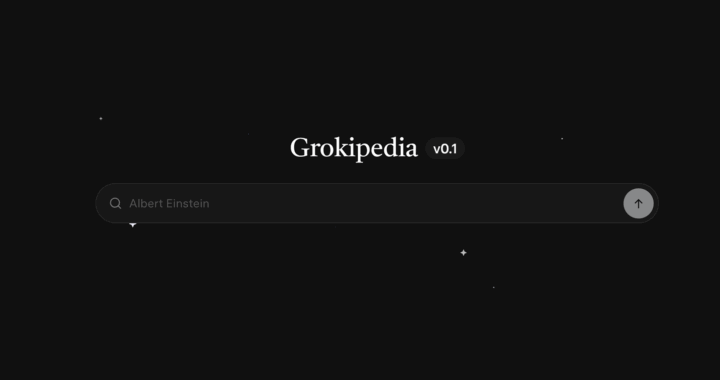
When xAI, the company founded by Elon Musk, launched Grokipedia on 27 October 2025, it immediately triggered a storm of curiosity and scrutiny. The platform, described as an artificial intelligence-generated encyclopedia powered by Grok, aims to offer a truthful alternative to Wikipedia while promising factual independence and ideological balance.
Grokipedia is Reinventing Online Knowledge
Pros: A Vision of Speed and Scale
The new online encyclopedia from Elon Musk wins admiration for its bold scale and its claim to elevate underrepresented viewpoints in topical and political debates.
Supporters hailed Grokipedia as a bold and inventive experiment in knowledge creation. The site uses the Grok chatbot to generate and fact-check information and debuted with nearly 8800 entries. Many early users praised its rapid search response, dark-themed interface, and uncluttered article layout that made browsing faster and more intuitive.
Others underscored the rapid generation of entries. Grok can synthesize summaries at a speed comparable to manual editing processes. Early reviewers believed this capability demonstrated how large language models might streamline knowledge updates during fast-moving events that required frequently refreshed context and sources.
There are also those who valued its alternative editorial framing. This is true for individuals who believe that there is an ideological lean in established reference platforms. They consider the presence of a parallel knowledge source beneficial since it expands interpretive space on contested issues and topics during periods of intense public debate.
Launching with almost a million entries is also a noteworthy accomplishment. Only an automated system could deliver such scale with limited development time. This milestone demonstrates that generative artificial intelligence systems may reshape knowledge production norms and accelerate reference expansion across multiple domains.
Cons: Where Grokipedia Falters
Reviewers and observers have identified factual inconsistencies, misleading wording, and algorithm-driven errors that weaken the platform foundation.
Grokipedia is facing criticisms over originality. Journalists from The Register and Futurism noted that numerous pages were almost identical to Wikipedia articles. Some displayed a Creative Commons notice. Others lacked acknowledgment altogether. This raises intellectual property concerns and ethical reuse of community-generated content.
Its claim of accuracy and neutrality has also been questioned. There is no public documentation explaining the process by which Grok performs factual verification of entries. There were no visible revision logs, editorial guidelines, or dispute mechanisms, leaving users uncertain about how factual errors or false information would be corrected.
Observers from Wired and The Atlantic found ideological bias in several Grokipedia entries. This is more pronounced in politically charged topics. Examples included omission of controversial details, sympathetic portrayals of Musk-related ventures, and reframing of social and political debates in language favorable to conservative perspectives.
The reliance on AI-generated text heightened risks of factual distortion. Reviewers discovered entries containing subtle inaccuracies, misleading phrasing, and fabricated connections. Experts warned that without human editorial oversight, Grokipedia could amplify errors with the authority of polished prose, potentially spreading misinformation on a scale.
Implications: Larger Lessons Behind
The platform prompts an urgent reconsideration of how truth is defined when artificial intelligence systems and language models create and curate information.
Grokipedia underscores the growing tension between automation and accountability in online information spaces. On one end, it is a proof of concept, demonstrating the effectiveness of generative AI in building a knowledge base. However, on the other end, it shows the disadvantages of machine autonomy with minimal human moderation.
A stark difference between how information is collated and disseminated also emerges. Wikipedia uses a volunteer-driven model that relies on transparency, discussion, and community correction. Grokipedia, on the other hand, operates via the automated collection, evaluation, and synthesis of information scraped from online and some offline sources.
The launching also highlights the fragility of public trust in online knowledge. Wikipedia has been criticized for its supposed left-leaning framing. Grokipedia is positioned as an alternative source of neutrally framed information. However, based on several analyses, it tends to frame entries with right-leaning or conservative ideologies and perspectives.
Remember that Grokipedia offers a remarkable demonstration of scale. However, it also exposes the limits of generative AI when applied to factual synthesis. Artificial intelligence can replicate linguistic precision, but it cannot yet replicate the contextual judgment and collective oversight that sustain the credibility of community-curated reference works.
FURTHER READINGS AND REFERENCES
- Rogers, R. 27 October 2025. “Elon Musk’s Grokipedia Pushes Far-Right Talking Points.” Wired. Available online
- Tangermann, V. 28 October 2025. “Elon Musk’s Grokipedia Extensively Copied From Wikipedia.” Futurism. Available online
- Vigliarolo, B. 28 October 2025. “Elon Musk’s Grokipedia Launches, Filled to the Brim with Plagiarism and AI Slop.” The Register. Available online
- Wong, M. 28 October 2025. “What Elon Musk’s Version of Wikipedia Thinks About Hitler, Putin, and Apartheid.” The Atlantic. Available online