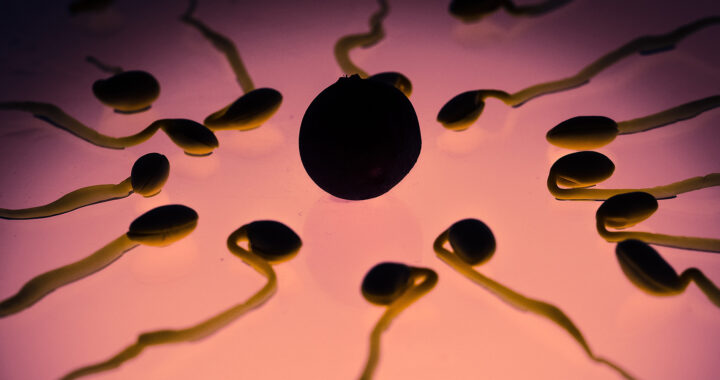
While life generally strives for homeostasis or a state of stability and balance, certain biological systems appear to benefit and even require instability to function and evolve. This is the central premise of the Selectively Advantageous Instability Theory proposed by John Tower, a molecular and computational biologist at the University of Southern California, after underscoring the fact that cells also thrive in some degree of chaos or instability.
Beyond Homeostasis: Introducing the Rule of Selectively Advantageous Instability to Explain Why Life Sometimes Prefers Chaos Over Permanent Calm
The traditional view in biology is that life evolves to conserve energy and materials at every turn. However, according to a provocative theory, life also partly thrives on instability. Cells spend massive amounts of resources building biological components or pursuing processes that are designed to break.
Background
Most biological rules are about conservation or minimizing energy and material costs. Even cells work tirelessly to maintain a constant internal environment. However, Tower also noted that many vital biological components are unstable. These include transcription factors with half-lives of 20 minutes and the presence of intrinsically disordered proteins.
Another example is telomeres. These protective caps at the end of the chromosomes shorten every time a cell divides. Most messenger RNA or mRNA is also designed to self-destruct. A stable mRNA will result in incessant churning out of the same proteins. Take note that the paternal mitochondria are marked for destruction shortly after fertilization.
Nevertheless, according to his Selectively Advantageous Instability Theory, Tower has argued that there is a rule that does the exact opposite of conservation. Several biological processes or systems often choose to build things that are fragile or short-lived. This happens even though it costs more energy to constantly build, break down, and rebuild materials.
Proposed Reasons Why Cells Waste Resources in Chaos
There is actually a massive advantage for a replicating system like a cell to thrive in chaos. The Selectively Advantageous Instability Theory is fundamentally about spending energy on purpose to gain a competitive edge. The following are the proposed reasons why cells expend and waste energy on unstable biological components and processes:
• Rapid Response: The hair-trigger effect notes that if a protein lasts for days, the cell cannot change its behavior quickly. If a protein lasts only minutes, the cell can pivot its entire chemistry almost instantly to survive a sudden change in environment.
• Maintenance: A machine cannot be fixed if its old parts cannot be taken out. The Selective Advantageous Instability phenomenon ensures that old or damaged macromolecules are constantly being turned over and replaced with fresh and functional ones.
• Basic Function: Even the most minimal life forms, such as bacteria with their simple DNA to survive, still keep genes for breaking down proteins and genetic materials. This suggests that life cannot exist without the ability to destroy its own components.
Promoting Genetic Diversity and Enhancing Survival
Another proposed reason why cells expend and waste energy and materials on creating unstable biological components or performing short-lived processes rests on the need to promote or improve genetic diversity and enhance survival. Tower noted several examples of how instability helps genes survive and further promote their cross-generation maintenance:
• Toxin and Antitoxin Systems: A cell produces a stable toxin and an unstable antitoxin. If the cell tries to get rid of the gene, the unstable antitoxin disappears quickly, the stable toxin remains, and the cell dies. Instability forces the cell to keep those genes.
• Uniparental Inheritance: Remember that paternal mitochondria are marked for destruction immediately after fertilization. This prevents conflict between the two types of mitochondrial DNA and keeps harmful paternal mitochondrial mutations at bay.
• Evolutionary Complexity: In computer models and synthetic life, stability often leads to dead ends, while systems that have unstable components tend to cycle faster. This cycling leads to the emergence of more complex systems through evolution.
Pointers
The aforementioned reasons why cells waste energy and materials on instability also collectively underscore the fact that Selectively Advantageous Instability is essential for both evolution and reproduction. However, in his 2024 paper, which was published in Frontiers of Aging, Tower also warns that wasteful use of energy and materials has costs.
Specifically, because instability requires constant energy and material expenditure, it eventually drains cells and the entire organism, thereby leading to aging. Moreover, because it can create two distinct states, it can sometimes protect unfavorable genes from being evolved away, thus allowing them to persist in a population and contribute to diseases.
Further Reading and Reference
- Tower, J. 2024. “Selectively Advantageous Instability in Biotic and Pre-biotic Systems and Implications for Evolution and Aging.” Frontiers in Aging. 5. DOI: 3389/fragi.2024.1376060