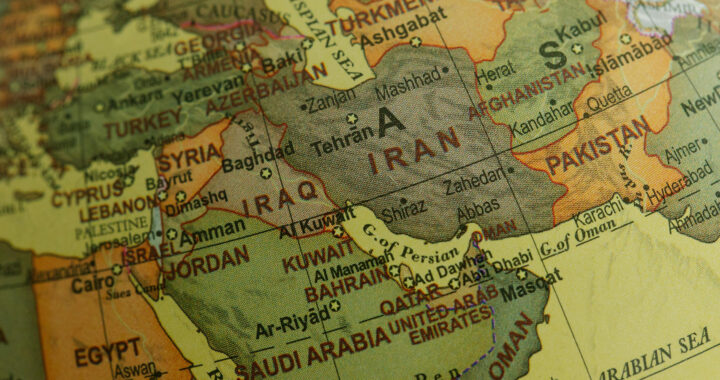
One of the take-home points in the National Security Strategy of the United States under the second administration of Donald Trump, apart from the declaration of the Trump Corollary to the Monroe Doctrine, is a pronounced pivot from the Middle East. It now views the region as less relevant to its national security priorities and international relations affairs.
The National Security Strategy of the Second Trump Administration Deprioritizes the Middle East Because the Region Has Become Less Relevant
The new National Security Strategy downshifts the Middle East from a primary theater of U.S. military engagement to a secondary arena managed through partnerships, deterrence, and selective counterterrorism. The second Trump administration signals that the era of large-scale regional interventions is over.
Less Dependence On Middle East Fossil Fuels
The White House, as required by the U.S. Congress, published the National Security Strategy of the second Trump Administration in November 2025. The document includes discussions of views and positions of the current U.S. government on region-specific international relations affairs. The Middle East has been bumped below the Americas, Asia, and Europe.
Note that the region historically consumed large amounts of diplomatic, military, and economic bandwidth from the U.S. The U.S. government has been criticized for its excessive meddling in its affairs. The new strategy argues that those days are over. The document explicitly states that the Middle East is no longer the top strategic priority for the U.S. government.
The pivot away from the Middle East, as explained in the document, comes from the fact that the region has become less relevant to the national interest of the U.S. One of the main factors for this is that American domestic energy production has significantly increased. This reduces urgency for heavy involvement in Middle East conflicts or permanent commitments.
Advancements in horizontal drilling and hydraulic fracturing have helped boost the domestic production in the U.S. Data from the U.S. Energy Information Administration show that crude oil production increased from 10 million barrels per day in 2018 to more than 13 million barrels per day in 2025. Natural gas production is now at 131 billion cubic feet per day.
It is worth noting that the National Security Strategy admits that the deep U.S. engagement in the Middle East was driven by its need to promote energy security. Regional stability was critical in ensuring U.S access to a stable oil and gas supply. However, energy independence from domestic production has made the U.S. less interested in what happens in the Middle East.
Transactional Partnership and Non-Intervention
The strategy also announces that the U.S. is abandoning the long-standing practice of promoting democracy or social reform in favor of flexible realism. The U.S. government, under the second Trump administration, is aiming to maintain good relations and peaceful commercial relations with nations of the world without imposing social change or its political values.
Hence, considering this shift in Middle East relations, the U.S. is refraining from pressuring leaders and nations in the region into abandoning their traditions and forms of government. The human rights and democracy agenda that often strained relations with Middle East countries is explicitly dropped in favor of pragmatic and more stable political and economic ties.
Another interesting point raised in the National Security Strategy is a claim that regional threats are considered diminished or manageable. It has noted that some of the threats that once justified U.S. heavy engagement have been reduced. It suggests that certain state and non-state actors have weakened, and conflicts in the region are less structurally destabilizing.
The U.S. then frames the Middle East as a place of partnership, friendship, and investment. The strategy promotes investment in industries beyond oil and gas, including nuclear energy, artificial intelligence, and defense technologies. This transitions the relationship with Middle East nations from a security-first paradigm to an investment and growth paradigm.
However, despite viewing the region as less relevant, the second Trump administration retains the goal of keeping adversarial power from dominating the Middle East through alliances with Israel and Gulf partners. The National Security Strategy considers Iran as a problem and describes it as the leading sponsor of terrorism in the world that needs to be neutralized.
FURTHER READINGS AND REFERENCES
- The White House. November 2025. National Security Strategy of the United States of America. President of the United States. Available via PDF
- S. Energy Information Administration. 2025. “Monthly Crude Oil and Natural Gas Production.” Petroleum & Other Liquids. U.S. Energy Information Administration. Available online