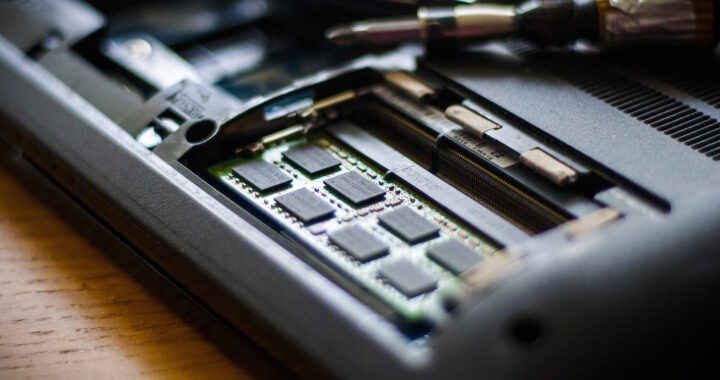
American semiconductor manufacturer Micron Technology, through an official statement released on 3 December 2025, has decided to discontinue its Crucial brand. This means that it has exited the consumer segments and has now focused on its business segments. The announcement has sparked warnings over worsening shortages and price hikes for end-user random access memory devices, solid-state storage drives, and consumer electronics that use these components.
Memory and Storage Shortage and Price Hikes: Understanding the Real Reasons Behind the RAM and SSD Supply Crunch
The era of cheap memory and storage has come to a screeching halt. What started as a market correction in early 2024 has spiraled into a full-blown crisis that exposes the structural issues and limitations of manufacturers.
Market Changes Due to Oversupply and Market Shift
Initial signs of an impending shortage and price hikes in RAM and SSD products emerged around late 2023 after manufacturers began cutting production due to excess inventory. Note that there was an oversupply in these products from 2022 to early 2023. This prompted manufacturers to cut output. But this decision set the stage for future shortages and price hikes.
The market then shifted from weak pricing to increasing demand and tighter supply by mid-2024 and further in 2025. The shortages and price hikes became more pronounced in mid-to-late 2025. For example, from September to October 2025, retail prices for 32GB DDR5 kits went up from USD 95.00 to over USD 184.00. This is an astounding 94 percent increase.
It is worth mentioning that Chinese manufacturers flooded the market with cheap and older DDR4 in late 2024. This temporarily masked the core shortage for budget builders. Most consumers did not realize that manufacturers, during this time, were repurposing their production facilities for the production of high-bandwidth memory or HBM for their business clients.
Manufacturers are also retiring older product nodes used for DDR4 to convert them for DDR5 or high-bandwidth memory production. However, millions of personal computers still use DDR4, and because fewer DDR4 products are being manufactured despite demand, the remaining stock has become scarce. This has caused prices for older DDR4 kits to skyrocket.
An aggregate of retail data shows that a 32GB DDR5 retailed for around USD 80.00 in January 2024. This increased to around USD 110 in January 2025 and further to USD 300 to USD 400 by December 2025. A 2TB NVMe SSD was at USD 90 in January 2024 before increasing to around USD 130 in January 2025 and further to USD 240-300 in December 2025.
Rising Demand for Artificial Intelligence Infrastructure
Micron shut down its consumer-oriented Crucial brand to focus on the high-growth data center segment. This exit leaves Samsung and SKY Hynix the two remaining major producers of memory modules. Even these two semiconductor companies are also focusing on developing and manufacturing memory and storage components for the data center segment.
It is important to underscore the fact that Micron, Samsung, and SKY Hynix dominate the global production of DRAM or dynamic random access memory. DRAM is a type of RAM that is used in personal computers, smartphones, and servers. These three companies control over 90 percent of the global supply. Any shift in their priorities instantly changes the global market.
Nevertheless, due to the modern artificial intelligence revolution, the demand for memory, as well as storage, is no longer driven by consumer electronics. The dominant driver of demand for these hardware components is large data centers that are responsible for training artificial intelligence models and running inferences for various artificial intelligence systems.
Both AI training and inference require high-bandwidth memory or HBM used in discrete graphics processors and other dedicated artificial intelligence accelerators. Every silicon wafer used for producing HBM, as well as server RAM, means less capacity available for consumer memory. Increasing HBM production capacity also means shrinking storage production.
Specific and Inherent Manufacturing Hurdles and Issues
Remember that production capacities for both consumer RAM and storage products are not only limited but are also further constrained by capacity allocation and prioritization. This comes from the physical limitations of production facilities. Manufacturers cannot build a new semiconductor fabrication plant overnight. Each takes 3 to 5 years and costs billions of dollars.
Furthermore, large tech companies like OpenAI and Google have secured long-term contracts that center on guaranteed pre-orders from manufacturers. Hence, because production is tight and many manufacturers have advanced their supplies of memory and storage devices, lead times for newer ones have increased, and availability has dropped in some higher-tier models.
Modern hardware and software now require higher RAM and storage space than ever before. This puts a further strain on the already thin supply. New PCs with AI features are pushing 16GB or 32GB of memory as the new baseline. Mid-range smartphones are shipping with 8GB to 12GB, and high-end smartphones are now shipping with 12GB to 16GB of LPDDR5X.
The pivot to business or enterprise segments, especially AI infrastructure and data centers, has a considerable level of influence on the availability and price of memory and storage devices for the consumer segment. However, upon a more critical inspection, the supply issue is not caused by a simple demand spike. It stems from fundamental hurdles in manufacturing.
Specifically, fundamental physical limits, extreme manufacturing complexity, slow scalability, and cautious capacity management represent primary constraints. These make the supply of memory and storage products rigid, fragile, and slow to expand under pressure. Manufacturers are pivoting to more lucrative segments to maximize earnings from limited manufacturing.