Calculating the water consumption of artificial intelligence data centers can be challenging due to the absence of standards. Some reports include direct on-site use. Others include indirect water from power generation. However, the fact remains that water consumption metrics, particularly indirect water use, are rarely disclosed.
The Growing Thirst of Artificial Intelligence: The Massive Water Cost of Training AI and Running AI Systems
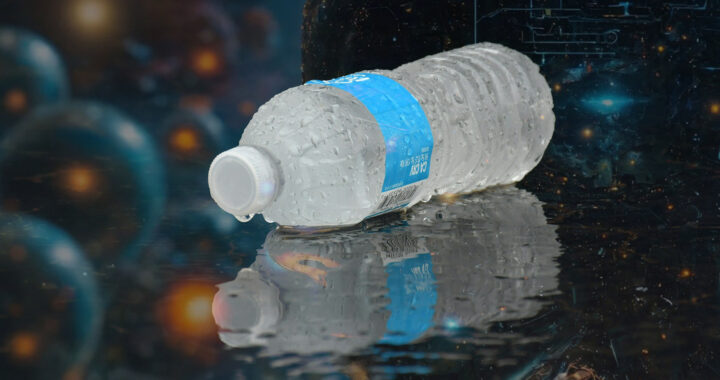
A short and single interaction with generative chatbots like ChatGPT or Gemini consumes about five drops of water. But generating a standard 100-word response can effectively drink up to 1.5 liters of water when accounting for water consumption for running data centers and the power plants that power them.
A Holistic Estimation of AI Water Footprint
Data scientist Alex de Vries-Gao, in a paper published on 17 December 2025 in Patterns, detailed a new methodology for estimating the water use of AI data centers for 2025. It involved a specific bottom-up estimation framework that looks at both actual water consumption in data centers and consumption in related and relevant processes.
Water consumption by AI is then categorized into two. These are direct or on-site and indirect or off-site. This categorization is deemed necessary to capture the entire water consumption footprint of the AI industry. It also encouraged using all available data from company reports and other public documents. Take note of the following:
• Direct or On-Site Water Use: This is the water used physically at the data center for cooling. These included evaporative cooling systems, cooling towers, and liquid cooling loops. The study used published corporate reports to estimate the water usage effectiveness, or the ratio of liters of water consumed per kilowatt-hour of electricity.
• Indirect or Off-Site Water Use: Thermal power plants require massive amounts of water for steam and cooling. Upstream fuel extraction and processing for non-renewable energy sources were also factored in. The study estimated this by mapping AI energy demand to specific regional power grids and their associated water intensity.
Moreover, because of uncertainties in utilization rates, cooling technologies, and energy mixes, lower-bound and upper-bound scenarios were factored in with assumptions about cooling efficiency, electricity sources, and data-center design. The study then aggregated direct and indirect water use into annual global water consumption ranges.
Billion Liters of Water Consumption Annually
The results of the estimation methodology revealed that the water footprint of AI is significantly larger than previously understood because indirect water consumption is often neglected or omitted in official sustainability reports of technology companies. Note that the paper categorized the results into macro-level and micro-level scales:
• Macro-Level: Global Annual Water Consumption
Annual water consumption for 2025 is estimated to range between 312.5 billion and 764.6 billion liters. A. de Vries-Gao noted that this is equivalent to the total annual volume of bottled water consumed by the entire human population. The figure is also more than a third higher than earlier 2024 estimates.
• Micro-Level: Water Consumption Per Prompt
A single text prompt with generative chatbots like Google Gemini or ChatGPT on GPT-4 consumes approximately 0.26 milliliters of water. A standard 100-word response costs three 500 ml bottles or 1.5 liters of water when accounting for both cooling and the water used by the local power grid to generate electricity.
Critical Drivers of High Water Consumption
Remember that the estimates for 2025 were significantly higher than earlier estimates. Part of this comes from the expanding applications of generative AI tools and the addition of new features or capabilities from newer large-language models. The study identified specific reasons or critical driving factors why the results are so high in 2025:
• Indirect Water Use: Power plants consume an average of 2 liters of water for steam and cooling for every 1 kWh of electricity an AI server uses. This indirect water consumption often exceeds direct water use for data center cooling.
• Multimodal Generation: Results for image and video generation show a massive spike. Creating a single AI-generated image can consume as much water as 50 to 100 text prompts due to the sustained high-intensity compute required.
• Reasoning Penalty: Newer reasoning models use internal chain-of-thought processing. These use significantly more water per answer because the AI processor remains active for much longer periods before outputting a response.
The water cost of prompt is also not the same everywhere. In arid locations like Arizona or parts of Asia, the water cost of a query can be 3 to 5 times higher than in cooler and water-rich climates like Ireland or Washington state. The water footprint has not seen a proportional drop despite tech companies reporting carbon footprint reduction.
Key Takeaways and Important Implications
The results demonstrate that the water footprint of artificial intelligence is massive, growing, and insufficiently acknowledged. Moreover, as AI deployment accelerates further, water demand will rise unless offset by changes in cooling technology, energy sourcing, and standards. Water scarcity risks could intensify alongside computational progress.
Note that the study of A. de Vries-Gao also estimated the energy consumption and related carbon footprint of AI data centers. He found that the carbon dioxide emissions of these facilities ranged between 32.6 million and 79.7 million metric tons. The total emissions of New York City for 2023 were about 52.2 million metric tons.
Hence, considering both the water and carbon footprints of AI, de Vries-Gao questions whether society is bearing most environmental costs while tech companies reap economic benefits. This suggests that policy and industry-level regulations are needed for fairness and sustainability, and that companies should be held accountable for their impacts.
FURTHER READING AND REFERENCE
- De Vries-Gao, A. 2025. “The Carbon and Water Footprints of Data Centers and What This Could Mean for Artificial Intelligence.” Patterns. 101430. DOI: 1016/j.patter.2025.101430