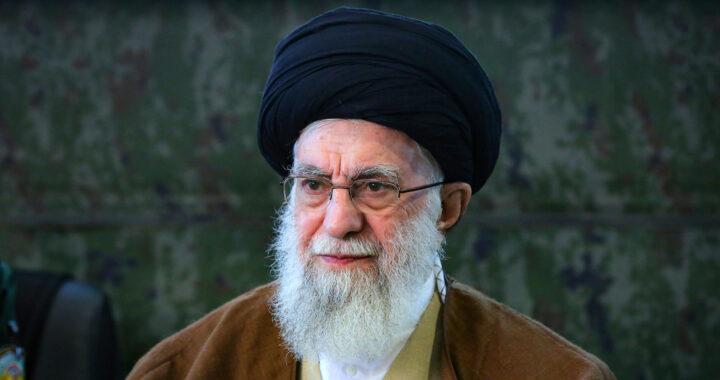
The Supreme Leader of Iran is the highest political and religious authority in the country. He serves as the head of the theocratic state who holds absolute authority over both the theocratic branch or the unelected power and the republican branch or the elected power of the government. The previous Supreme Leader, Ali Hosseini Khamenei, was in office from 1989 to February 2026.
The Emergence of the Supreme Leader of Iran Following the 1979 Islamic Revolution
The primary function of the Supreme Leader is to act as a guardian of the Islamic Revolution. He provides oversight to ensure that the democratic elements of Iran, such as elections and parliamentary legislation, do not stray from the core theocratic mission of the country.
Overview
Iran has a Supreme Leader, officially called the Rahbar, because of a specific religious and political theory called Velayat-e Faqih or the Guardianship of the Islamic Jurist. The position was created during the 1979 Islamic Revolution to ensure that the laws and government actions of the country remain aligned with the principles of Islam.
Velayat-e Faqih was popularized by Ruhollah Khomeini, the leader of the 1979 Revolution, who argued that in a truly Islamic society, the government must be run according to Sharia law. Note that Khomeini founded the current Islamic Republic of Iran and served as its first-ever supreme leader from 1979 until his death in 1989.
Nevertheless, because certain Muslim clerics known as Islamic jurists have the deepest knowledge of these laws, Khomeini believed one of them should serve as a guardian over the entire state. This leader acts as a representative of Muhammad al-Mahdi, a messianic figure in Shia Islam known as the Hidden Imam, until his prophesized return.
Further Details
Iran was an absolute monarchy headed by Shah Mohammad Reza Pahlavi before the disruptive revolution in 1979. The removal of monarchial rule led to a brief power vacuum and an attempt at secularization. Figures like Khomeini and their supporters saw this as an opportunity to establish Iran as a republic based on the principles of Islam.
Hence, in creating an Islamic republic, the Supreme Leader role was positioned as both a political leader and a religious authority. It is designed to adhere to the theocratic Islamic republic structure of the Iranian government. This hybrid political system merges elements of a republic, especially leadership election, and theocracy or religious law.
The position was essentially created to preserve the gains from the Islamic Revolution. It also uses teachings in Islam as its source of power or authority. Hence, after the monarchy was abolished by a public vote in March 1979, a second referendum was held to approve the new Constitution in December 1979 and legally enshrine the new position.
Power
The Supreme Leader sits at the top of the governmental structure. While the elected Iranian president manages the economy and daily government operations, the Supreme Leader has the final word on foreign policy, serves as the Commander-in-Chief of the Islamic Revolutionary Guard Corps, and appoints heads of the judiciary and state-run media.
Moreover, unlike the president, who is elected for four years, the Supreme Leader is appointed for life. The Assembly of Experts, which is composed of publicly elected 88 Islamic scholars, is the only group legally empowered to choose the leader. The options for the next Supreme Leader come from a pool of clerics and government officials.
There is insider information that the Islamic Revolutionary Guard Corps has held the true power because no candidate can realistically take the reins without the blessings of the IRGC generals. The IRCG has evolved from a simple militia to a state-within-a-state since it controls between 30 and 50 percent of the entire Iranian economy.
FURTHER READINGS AND REFERENCES
- Council on Foreign Relations. 13 June 2025. “The Islamic Revolutionary Guards Corps.” Backgrounders. Council on Foreign Relations. Available online
- Hovsepian-Bearce, Y. 2015. The Political Ideology of Ayatollah Khamenei: Out of the Mouth of the Supreme Leader of Iran. Taylor & Francis. ISBN: 1317605810
- H. L. 2021. “Islamic Republic of Iran.” The Iranian Revolution. Chelsea House. ISBN: 9781646936656
- Zickar, S. 17 April 2025. “The IRCG: Iran’s Most Powerful Institution.” No Labels. Available online
Photo Credit: Khamenei.ir / Ali Khamenei – Seyyed Ali Hosseini Khamenei / 2023 / Adapted / CC BY-SA 4.0 International