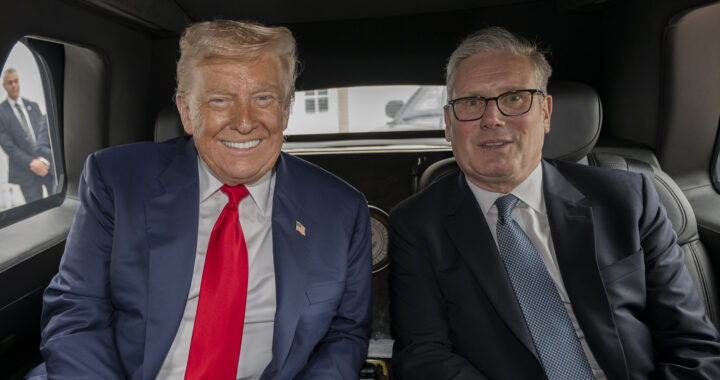
The historical special relationship between the United States and the United Kingdom, a phrase coined by Winston Churchill during the Second World War, has reached a considerable level of strain during the second Trump administration and following the US-Israel strike in Iran.
Unravelling Special Relationship Between the United States and the United Kingdom
The US-UK special relationship has shifted from an alliance based on shared values and historical sentiment to a fragile and transactional arrangement that is currently being tested by a major military conflict and a disagreement over global leadership.
Note that the main source of the current tension is the outbreak of war involving the combined forces of the U.S. and Israel against Iran. Below are the main points:
• Military Base Refusal
U.K. Prime Minister Keir Starmer, a former human rights lawyer, refused to allow the U.S. government to use U.K. military bases, specifically those located in Cyprus, for offensive attacks against Iran.
• Highlighting the Iraq Mistake
The prime minister explicitly mentioned the outcomes and lessons of the Iraq War in 2003 to drive his point. He told the U.K. Parliament that his government does not believe in “regime change from the skies.”
• Limited Cooperation
Starmer eventually allowed the military forces of the U.S. government to use British bases for limited defensive operations after Iran retaliated. But the second Trump administration considers this insufficient.
U.S. President Donald Trump reportedly had an outburst in the Oval Office, where he accused Starmer of hurting bilateral ties and being uncooperative.
Moreover, in an interview with The Sun, the U.S. president stated, “This is not Winston Churchill that we are dealing with.” He was referring to the lack of total alignment of current U.K. prime minister with the military goals and objectives of the U.S. government.
Trump showed some affinity for Starmer. He even visited the U.K. twice and struck a favorable trade deal. However, some might consider this a mere transaction approach.
In addition, beyond the Iran conflict, other issues are pushing the two countries apart. Threats of withdrawing security guarantees and imposing tariffs on allies have placed the U.K. government on guard. There are also disagreements from recurring tensions over Greenland.
Starmer is making slow but deliberate moves to boost the independent defense capabilities of the U.K. as the U.S. becomes less reliable as an ultimate security guarantor.
The U.K. is also seeking to increase trade with China and India to reduce its reliance on the U.S. market. This can be seen as a preparation for a future where the special relationship with the U.S. forged in the 20th century may not survive the challenges of the 21st.
FURTHER READINGS AND REFERENCES
- Cole, H. 3 March 2026. “Not so Special: Starmer Accused of Putting Special Relationship in peril After Trump Revealed ‘Sadness’ at Rift with ‘Unhelpful’ PM.” The Sun. Available online
- Frayer, L. 5 March 2026. “After 80 Years, the US-UK ‘Special Relationship’ Has Changed Under Trump.” NPR. Available online
- Keate, N. 3 March 2026. “Trump Says US-UK Relationship ‘Not Like It Used To Be.” Politiko. Available online