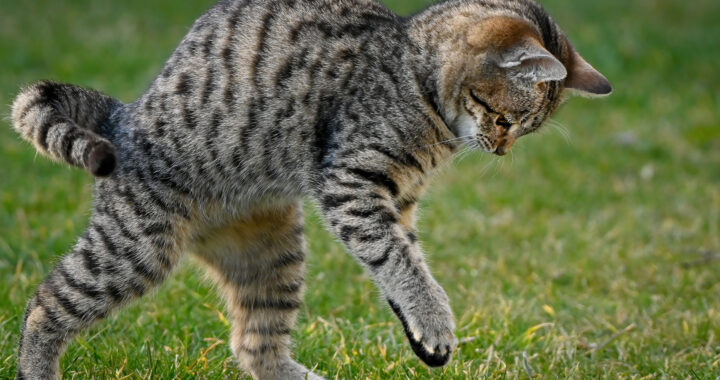
One of the most renowned abilities from a wide range of exceptional physical capabilities of cats is their righting reflex. This is an innate ability that enables a particular cat to orient itself as it falls, allowing it to land on its feet. Note that this phenomenon has also been referred to as the falling cat problem—as it has fascinated physicists and biologists since the late 19th century.
The Biomechanics of the Perfect Landing: Japanese Scientists Mapped the Feline Spine and Analyzed Footage of Righting Reflect in Action to Understand Why Cats Almost Always Make Perfect Landings
Background
A team of Japanese scientists, which includes lead author Yasuo Higurashi and lead researcher Masahiro Morimoto, provides a biomechanical explanation for the righting reflex of cats. In their report published on 24 February 2026 in The Anatomical Records, they used high-speed cameras to film live cats dropping from one meter onto soft cushions.
It is also worth mentioning that the team examined spinal columns of 5 donated cat cadavers to perform stress tests. These tests are intended to measure torque, stiffness, and range of motion while keeping ligaments and discs intact. A frame-by-frame analysis of the footage verified how the anatomical findings translated into actual movement.
Findings
Nevertheless, based on anatomical testing, the researchers discovered that the ability of a cat to right itself mid-air is not just about muscular capabilities, whole-body movement coordination and agility, reflexes, or instinct, but is rooted in the specific physical properties of its spine. They found that the spine is essentially split into two functional zones:
• The Thoracic Spine in the Chest Area
This section is incredibly flexible. The study found it has a “neutral zone” of about 47 degrees. This means that it can rotate almost freely with virtually no resistance. It is roughly three times more flexible than the lower back.
• The Lumbar Spine in the Lower Back
This lower section is in contrast with the thoracic spine. It is much stiffer and serves as a stabilizer. It has no neutral zone. This means it resists twisting and provides the structural strength needed for a controlled landing.
Moreover, based on a thorough review of the footage of cats dropping from a meter-high platform to a cushioned base, the Japanese scientists further observed and discovered what exactly happens as a particular cat rights itself mid-air. They specifically found that the righting maneuver happens in a precise and sequential order rather than as one fluid movement:
• Initial Anterior Rotation
The front portion of the body of a cat is lighter and connected to the highly flexible thoracic spine. This allows its head and paws to twist toward the ground first.
• Measurable Delay
Researchers have observed that there is a measurable lag of roughly 72 to 94 milliseconds before the rest of the body follows.
• Posterior Follow-Through
The stiffer and heavier rear-end of the cat, where the lumbar region is located, then uses the already-rotated front half as an anchor to swing itself into alignment.
Implications
Why do the findings above matter to science? It is worth mentioning that the discovery by the team of Japanese scientists tackles a long-standing debate in physics regarding the conservation of angular momentum. Specifically, for more than 100 years, scientists wondered how a cat could start rotating in mid-air without having anything to push off of.
The study supports the bend-and-twist model over simpler theories. By flexing its spine and using the massive difference in flexibility between the front and back halves, cats seem to be defying physics. However, they are simply moving different parts of their body in a way that allows the net rotation to change while the total angular momentum remains zero.
FURTHER READING AND REFERENCE
- Higurashi, Y., Kaino, Y., Habara, M., Okamoto, S., Yoshizaki, K., Sakurai, M., and Morimoto, M. 2026. “Torsional Flexibility of the Thoracic Spine is Superior to that of the Lumbar Spine in Cats: Implications for the Falling Cat Problem.” The Anatomical Record. DOI: 1002/ar.70165