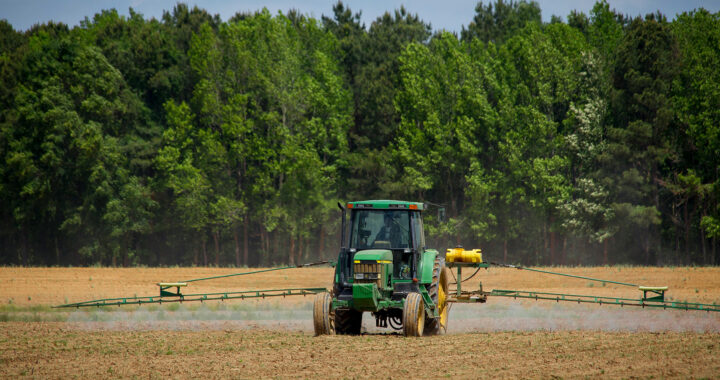
Growing the same crop in the same field is unsustainable. Monoculture farming can wear out soils and result in lower yields and increased pest problems. A global investigation led by Shingirai Mudare, published on 29 October 2025 in Nature Communications, revealed that rotating crops or crop rotation can provide a multitude of benefits beyond sustainable agriculture and increased crop yield.
Investigating the Benefits of Crop Rotation: A Global Study Revealed that Rotating Crops Resulted in Higher Yields, More Nutrients, and Better Revenues
The Problem With Monoculture Farming
Monocultures may dominate farms, but decades of experiments reveal the untapped potential of rotating crops. Researchers analyzed thousands of trials across six continents to understand how crop sequences impact yields, nutrition, and farm economics.
Farms across the world face the challenge of producing more food for the growing demand while keeping farmlands fertile and productive. Most farmers depend on monoculture, which involves planting the same crop repeatedly. This practice can drain the soil and make plants vulnerable to pests and disease. Crop rotation offers a straightforward alternative.
Crop rotation is a farming practice that falls under the concepts of regenerative design and the principles of regenerative agriculture. It involves growing different types of crops sequentially on the same plot of land in a planned order. This improves soil health, reduces pests and diseases, and manages nutrients by preventing the continuous planting of the same crop.
Data from 738 field trials conducted across 6 continents between 1980 and 2024 were collected, and 3663 field observations comparing traditional continuous cropping with different rotation sequences were reviewed. These sequences included legumes, cereals, tubers, and cover crops, showing how different combinations influence productivity and nutrition.
Each rotation system was analyzed to measure the yield of the main crop and the total yield. Note that the analysis also included the pre-crop grown before it. The researchers also looked into vital nutrition information, which includes calories, protein, and minerals like iron, magnesium, and zinc. Revenue estimates were calculated using crop yields and market prices.
Statistical models accounted for differences in location, crop type, fertilization, and management practices. The researchers also examined long-term data to see how the practice of rotating crops affected year-to-year yield stability. Nevertheless, by combining decades of experiments, the researchers saw patterns that no single farm trial could reveal on its own.
Important Benefits of Crop Rotation Systems
Crop rotation sequences show dramatic gains across continents. These include up to 23 percent more harvests, enhanced protein and minerals content, and 20 percent greater farm revenue. Strategic rotations should redefine farming practices globally.
Results from thousands of field observations and hundreds of field trials collectively point to the fact that changing what is planted from year to year brings important benefits for both farmers and consumers. Rotations increase crop yields, improve the nutritional content of harvests, boost farm income, and reduce the unpredictability of harvests. Below are the further details:
• Impact on Subsequent Crop Yield
Rotating crops increased subsequent crop yields versus continuous monoculture. Legume pre-crops resulted in an average increase of 23 percent. Non-legume pre-crops produced approximately 16 percent gain. This reflects nitrogen fixation and other fertility benefits. Stability and resilience improved under rotation systems.
• Total Farm Production Output
Moreover, considering both pre-crop and main crop, total yields under rotations increased between 20 and 24 percent on average relative to monoculture systems. This calculation demonstrates that rotation provides a cumulative advantage by producing multiple crops sequentially rather than focusing solely on the main crop.
• Nutritional Content of Harvests
Dietary energy increased by 24 percent, protein content rose by 14 percent, and principal micronutrients improved significantly. Iron content increased by 27 percent, magnesium by 17 percent, and zinc by 17 percent in crop rotational systems. Nutritional gains were more pronounced when legumes were used as pre-crops.
• Specific Farm Revenue Impact
Gross farm revenue under controlled experimental conditions increased on average by 20 percent with crop rotation. Higher revenue resulted from improved yield quantity, enhanced quality, and reduced year-to-year variability. These benefits indicate economic advantages beyond agronomic and nutritional improvements.
• Regional and Sequence-Specific Gains
Soybean-maize rotation in South Africa produced 118 percent higher calorie output, 191 percent higher nutritional quality, and 189 percent higher revenue than soybean farming. In western and southern Africa, sorghum-maize rotation yielded 94 percent higher calories, 91 percent higher nutrition, and 89 percent higher revenue.
• Stability of Agricultural Yield
Rotation systems exhibited less year-to-year fluctuation compared with monoculture farming. This means that crop rotation provides more predictable outputs and decreases or moderates agronomic risk. This outcome is particularly valuable for smallholder farmers in regions prone to climatic variability and soil degradation.
• Notable Synergy Across Farming Goals
It is also worth mentioning that most rotation sequences showed win-win or win-win-win outcomes across crop yield or agricultural output, nutritional content, and farm revenue. The proportion of synergistic outcomes ranged from 33 to 54 percent. This shows that most rotations provided multiple benefits without evident trade-offs.
Practical Insights and Notable Caveats
The study underscores that general crop rotation and specific smarter crop sequences can enhance soil, food quality, and farmer income. Yet real-world success depends on local conditions, policy support, and the ability to implement rotations at scale.
Crop rotation is more than a farming technique. It is a particular farming strategy for healthier soil, higher harvests, and better nutrition. The results of the investigation demonstrate that even simple changes to crop sequences can have significant impacts for farmers and communities. The practice can help in addressing challenges pertaining to food demand and food security.
It is worth underscoring the fact that planting legumes plays a special role in rotations. These crops improve soil fertility for future crops by fixing nitrogen in the soil. Non-legume pre-crops also bring benefits like improving soil structure, increasing water retention, and controlling pests and disease. Choosing the right sequence for local conditions maximizes results.
Barriers remain to adopting crop rotation systems. To be specific, in many regions, monoculture farming persists because of existing market demands, infrastructure gaps, or limited access to seeds and technical support. While the research points to potential gains, practical adoption requires policies, training, and resources to make crop rotation feasible for farmers.
The research has several caveats. Revenue calculations represented gross farm income, not net profit nor individual income. Nutritional values used standard reference data, and results come mainly from experimental trials. Real-world outcomes may differ because of factors like local climate, management practices, and market conditions, but the benefits remain clear.
FURTHER READING AND REFERENCE
- Mudare, S., Jing, J., Makowski, D., He, X., Liang, Z., Sims, Z., Wanger, T. C., Tilman, D., Zhang, F., and Cong, W.-F. 2025. “Crop Rotations Synergize Yield, Nutrition, and Revenue: A Meta-Analysis.” Nature Communications. 16(1). DOI: 1038/s41467-025-64567-9