The wave of protests in Nepal that began after 4 September 2025 has drawn attention not only because of its historic relevance but also due to the innovative use of digital communication platforms. Following government bans on several social media platforms, protesters, who have been led by the Generation Z population, turned to mainstream and alternative communication tools to sustain their movement.
Digital-Powered Resistance: The 2025 Gen Z-Led Protests in Nepal Were Backed By Discord And Other Digital Platforms
Spotlight on the Digital Platforms
One of the most surprising developments was the role of Discord. Initially developed for gaming communities, it has become a platform for political discussion, coordination, and symbolic voting in Nepal. Protesters used it to organize and coordinate, conduct polls, and even nominate interim leadership. This highlights its potential as a deliberative forum.
Discord was not the sole platform adopted. TikTok remained accessible due to compliance with registration requirements, and it was used for sharing short-form videos and live broadcasts to document and report what was happening on different fronts and attract additional supporters. Viber serves as a more mainstream communication platform after other services went dark.
Alongside Viber, lesser-known platforms such as Nimbuzz, WeTalk, and Poppo Live quietly gained traction as alternative spaces for dialogue and to maximize audience reach. Reddit emerged as a digital meeting ground for wider conversations. Its open forum format allowed the sharing of protest footage, critical discussions, and information exchange.
The newer Bitchat messaging platform attracted remarkable attention among alternatives. Based on Bluetooth mesh networking, it does not depend on internet connectivity, making it resistant to government censorship. It experienced nearly 50000 downloads in Nepal alone, underscoring the demand for resilient peer-to-peer communication tools during unrest.
Choosing the Interim Prime Minister
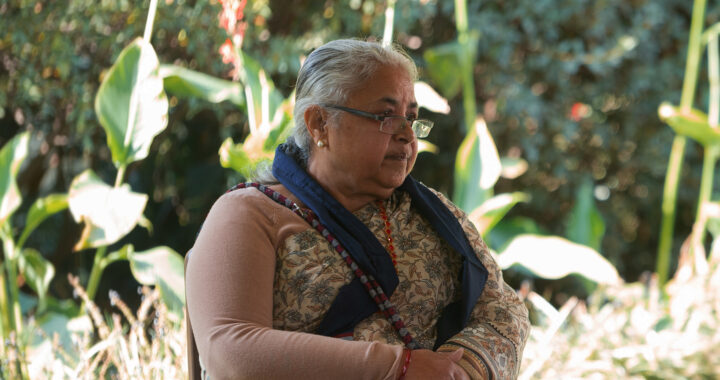
Digital mobilization by Discord and other platforms resulted in concrete political change. Massive youth-led protests, which included the burning of buildings, forced Prime Minister K.P. Sharma Oli to resign. Parliament was dissolved shortly after, and Sushila Karki, former Chief Justice, was floated and discussed in Discord as the possible interim prime minister.
Online and offline negotiations among stakeholders preceded the eventual consensus appointment of Karki. Leaders of various political parties, army chief Ashok Raj Sigdel, President Ramchandra Paudel, and key representatives of the Generation Z protest movement reached a breakthrough agreement. General elections are now scheduled for March 2026.
The formal appointment process followed constitutional provisions. The Constitution of Nepal, specifically under Article 61 of Section 4, notes that the President has the authority to appoint a caretaker Prime Minister after consulting political parties and civil society during extraordinary circumstances. The appointment of Karki is pursuant to this provision.
Karki was sworn in by Paudel on 12 September 2025 in a televised ceremony at the presidential residence. She convened her first cabinet meeting later that day, in which she recommended the dissolution of the House of Representatives. Her recommendation was accepted, and the House of Representatives was formally dissolved at eleven o’clock that same evening.
FURTHER READINGS AND REFERENCES
- Baskar, P. 11 September 2025. “Nepal’s Social Media Ban Backfires as Politics Moves to a Chat Room.” The New York Times. Available online
- NDTV News Desk. 9 September 2025. “How TikTok Became The Go-To Communication Tool For Nepal Protesters.” NDTV. Available online
- Sankaran, V. 13 September 2025. “Sushila Karki: How Gen Z protestors chose Nepal’s first woman prime minister on Discord.” The Independent. Available online