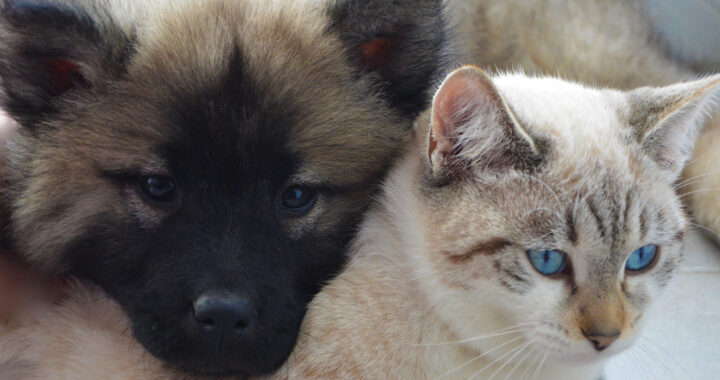
A long-running aging survey in Europe provided researchers led by Andreas Ihle with an unusual opportunity to observe how ordinary aspects of home life might influence cognitive change. Their paper, which was published on 6 May 2025 in Scientific Reports, drew the relationships between pet ownership and cognitive functioning in later adulthood.
Eighteen Years of Data From Europe Shed Light on the Cognitive Benefits of Pet Ownership in Later Adulthood
Researchers analyzing repeated cognitive assessments from a large European cohort report that pet owners experience gentler declines in memory and executive functioning. Dogs and cats provide the strongest associations.
Context Behind the Investigation
Age‐related cognitive decline is a growing public‐health concern because it reduces quality of life, increases care burden, and drives health and long‐term‐care costs. Several lifestyle factors, such as diet and eating habits, quality of sleep, social participation, and adult education, have been linked to slower cognitive decline. One less-examined factor is per ownership.
Estimates suggest that about 38 percent of Europeans own pets. Prior studies have suggested that pet supports physical and mental health. Note that the physical and mental well-being of individuals is tied to cognitive health. However, there is limited, mixed, and often cross-sectional evidence linking pet ownership and its impacts on age-related cognitive decline.
Nevertheless, to understand further the benefits of pet ownership, Ihle and his team argue for the necessity of a large‐scale longitudinal research that also factors in pet-species specificity and age-moderation. This means investigating the association between owning pets and cognitive decline and how this association differs across pet species and age groups.
The Survey of Health Aging and Retirement in Europe provided the researchers with 18 years of data from 16582 people aged 50 and older to assess verbal fluency, plus immediate and delayed recall scores across repeated waves. Note that the dataset also includes data or specific information needed for distinguishing people who had dogs, cats, birds, and fish.
Results Based on 18 Years of Data
Findings revealed slower cognitive decline among pet-owning groups. The phenomenon was more pronounced among dog and cat owners. These species-specific outcomes highlight that dog and cat companionship correlates with a more favorable cognitive direction. Bird and fish ownership had no significant protection. Below are the further details of each finding:
• Slow Cognitive Decline Among Pet Owners
Pet owners showed reduced decline in verbal fluency, immediate recall, and delayed recall compared with non-owners. Modeling across repeated waves showed clear differences in cognitive trajectories that favored households with pets.
• Distinct Baseline Cognitive Profiles
Note that pet owners began the study with higher verbal fluency but lower immediate and delayed memory scores. However, despite lower early memory performance, decline rates were more gradual across the long-term observation window.
• Absence of Age Group Moderation
Adults aged 63 or older did not gain greater or lesser benefit relative to adults aged 62 or younger. Statistical tests specifically showed that different age groups did not change the relationship between pet ownership and cognitive decline.
• Significant Dog-Specific Effects
Dog owners showed a slower decline in immediate and delayed recall across waves, despite lower baseline memory scores. Dog ownership did not influence verbal fluency decline but did produce measurable advantages in memory trajectories.
• Significant Cat-Specific Effects
Cat owners began with stronger verbal fluency and delayed recall scores. They exhibited a slower decline in those same domains across time. Cat ownership did not significantly influence the rate of immediate recall decline.
• No Measurable Benefits From Birds or Fish
Bird owners began with lower cognitive scores across all domains and did not show meaningful protection from decline. Fish ownership also showed no significant association with verbal fluency, immediate recall, or delayed recall outcomes.
• No Species and Age Interaction
None of the tested pet-species specificities demonstrated stronger or weaker associations for older versus younger participants. This is an indicator of the fact that the demonstrated species-related effects remained stable across age subgroups.
Takeaways and Notable Caveats
The species-specific outcomes underscore that dog or cat companionship correlates with favorable cognitive trajectories, while bird and fish groups show no significant protection. These point toward beneficial mechanisms linked to social contact, physical movement, and emotional and stress regulation. These are known to relate to cognitive preservation.
Owning birds or fish has less emotional stimulus and interactive mechanisms. Other factors may counterweigh the benefits and reduce the potential protective effect. For example, birds may disturb sleep via noise, while fish may have shorter lifespans, which limits emotional bonding. Owning a dog or a cat is considered a more active form of pet ownership.
The study has limitations. It is observational and correlational. While slower cognitive decline is associated with pet ownership, this cannot prove causation. Pet ownership was only measured at baseline. The study did not capture changes in pet ownership over time. Note that generalizability to non-European or more diverse sociocultural settings is uncertain.
A 2022 study found evidence of an increase in prefrontal brain activity and stronger attentional processes and emotional arousal caused by interaction with a dog. A 2020 study found evidence of increased activation of the prefrontal cortex and the inferior frontal gyrus when interacting with cats. This might be due to the hard-to-predict temperament of the animal.
FURTHER READINGS AND REFERENCES
- Marti, R., Petignat, M., Marcar, V. L., Hattendorf, J., Wolf, M., Hund-Georgiadis, M., and Hediger, K. 2022. “Effects of Contact With a Dog on Prefrontal Brain Activity: A Controlled Trial.” PLOS ONE. 17(10): e0274833. DOI: 1371/journal.pone.0274833
- Nagasawa, T., Ohta, M., and Uchiyama, H. 2020. “Effects of the Characteristic Temperament of Cats on the Emotions and Hemodynamic Responses of Humans. PLOS ONE. 15(6): e0235188. DOI: 1371/journal.pone.0235188
- Rostekova, A., Lampraki, C., Maurer, J., Meier, C., Wieczorek, M., and Ihle, A. 2025. “Longitudinal Relationships Between Pet Ownership and Cognitive Functioning in Later Adulthood Across Pet Types and Individuals’ Ages.” Scientific Reports. 15(1). DOI: 1038/s41598-025-03727-9