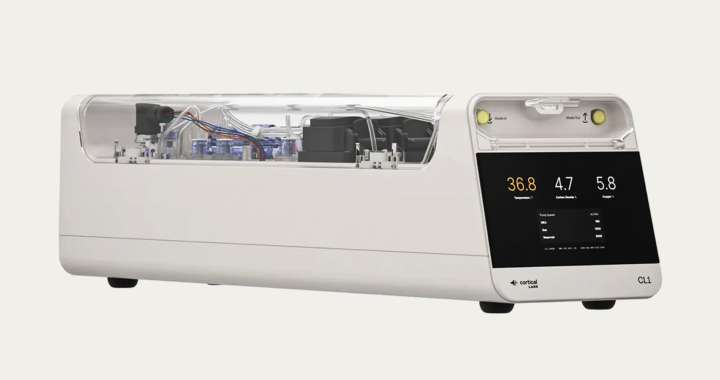
Cortical Labs, a biotech startup based in Melbourne, is establishing the first biological data centers in Melbourne and Singapore. Specifically, instead of silicon chips, these facilities are designed to run on lab-grown human brain cells to process information.
Biotech Company Cortical Lab is Ushering in the Era of Biological Data Centers that Run on Lab-Grown Human Brain Cells
Traditional data centers that run on silicon-based processors guzzle huge amounts of energy and water. However, for a biotech startup based in Australia, the future is in wetware. It has an operational biological data center in Melbourne and is building another facility in Singapore. These data centers run on lab-grown human brain cells.
Background
The initiative is based on the idea of wetware. To define, while hardware refers to physical parts or components of a computer, and software represents the digital code, wetware refers to specific biological components used for information processing.
Cortical Labs made headlines in late February 2026 after showcasing how it developed a petri dish of about 800000 lab-grown neurons that learned how to play the PC game Doom. The company did a similar experiment in 2022 with the 1970s game Pong.
It is also running a small biological data center in Melbourne, considered the first prototype in the world, with 120 biological computing units called CL1. The facility runs the Cortical Cloud service that allows researchers to interact with biological neurons remotely.
Nevertheless, in partnership with DayOne Data Centers and the National University of Singapore, it is building a second facility in Singapore. The plan is to start with 20 CL1 units for validation and scale up to 1000 units for commercial operation.
Using Brain Cells
The primary driver behind the idea is the energy and water problems emerging from the modern artificial intelligence revolution. Traditional data centers running silicon-based AI processors are consuming massive amounts of energy and water for cooling.
A single CL1 unit from Cortical Labs is said to consume less power than a handheld calculator. A cluster of these biological computing units can perform tasks at a fraction of the energy cost of discrete graphics processing units used as AI accelerators.
Moreover, unlike static silicon chips, living neurons naturally learn and adapt. These lab-grown and lab-designed neurons also produce natural neural networks. Some experts noted that these are more efficient than artificial neural network architectures.
Each CL1 unit contains hundreds of thousands of human brain cells grown from stem cell samples that sit atop sophisticated electrode arrays that facilitate communication between biology and machine. The resulting product is a hybrid computing system.
The units also work by using electrical pulses to stimulate the natural neural networks into specific patterns. The cells respond by reorganizing their connections in a process known as neuroplasticity. The system then learns through experience rather than just static lines.
Challenges
The biological data centers from Cortical Labs are not intended to replace traditional data centers from tech giants like Amazon and Google. Silicon-based computing remains an integral part of the modern digital and greater technological infrastructure.
Moreover, considering the current capabilities of biological computing units made of lab-grown brain cells, which are relatively modest, the entire technology is years or decades away from challenging the capabilities of mainstream silicon technology.
There are also challenges in maintenance. Keeping biological cells and tissues alive and operational in a data center environment or other commercial and industrial settings is labor-intensive and requires specialized specialists trained in programming and biology.
Scaling human-made biological systems remains challenging because inventors and operators have to replicate natural life support systems like metabolism. Cells not only need glucose and oxygen but also produce toxic wastes. This is hard to replicate at scale.
FURTHER READINGS AND REFERENCES
- Cortical Labs. n.d. “Our Research.” Cortical Labs. Available online
- 10 March 2026. “DayOne and Cortical Labs to develop Singapore’s First Biological Data Center.” DayOne. Available online
- NUS Yong Loo Lin School of Medicine. 11 March 2026. “Biological Data Center Prototype Established at NUS Medicine.” NUS Yong Loo Lin School of Medicine. National University of Singapore
- Pho, O. 10 March 2026. “Human Brain Cells Run New Data Centers in Singapore, Melbourne.” Bloomberg. Available online
Photo Credit: Cortical Labs